
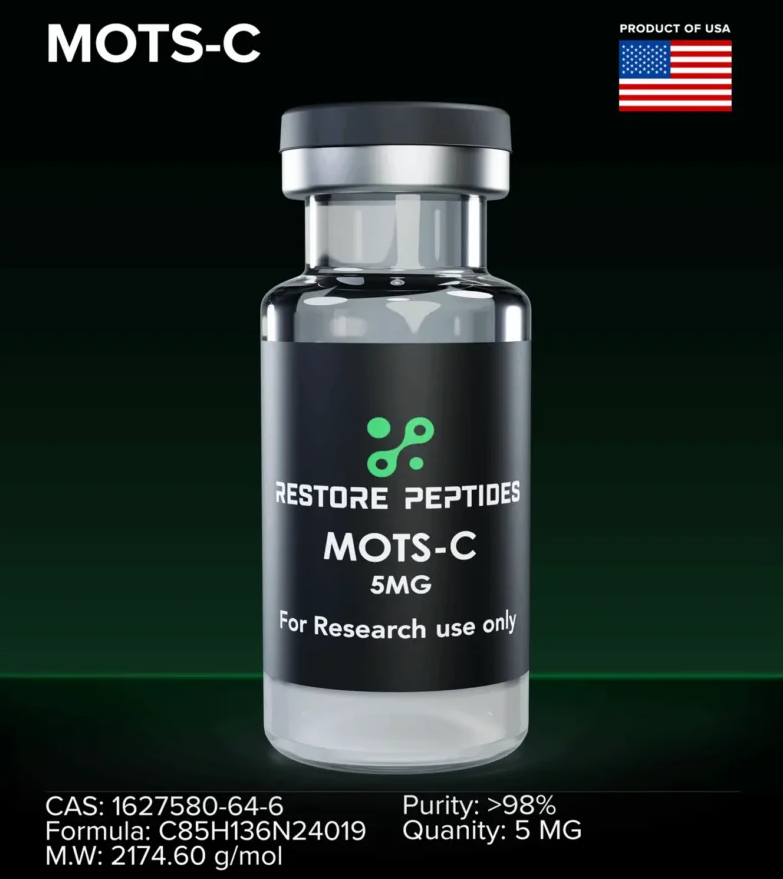
FOR RESEARCH USE ONLY. The content provided in this article is for educational and informational purposes only and is based on published scientific literature. The compounds and delivery formats discussed are not approved by the FDA for human or veterinary use. They are strictly intended for laboratory research and in vitro experimentation. Restore Peptides does not endorse or encourage the use of these products outside of a controlled research setting.
When sourcing lyophilized peptides for research, the white powder inside a sealed vial represents far more than a convenient shipping format. Lyophilization – the controlled freeze-drying process used across pharmaceutical and research-grade peptide manufacturing – is a critical determinant of compound purity, structural integrity, and long-term stability. For researchers working with sensitive synthetic sequences, understanding why and how peptides are lyophilized is essential to evaluating supplier quality and ensuring reliable experimental outcomes.
Yet not all lyophilized products are created equal. Variations in freezing protocols, drying parameters, and post-processing quality control can produce dramatically different stability profiles – even for the same peptide sequence. The difference between a well-lyophilized compound and a poorly processed one may not be visible to the naked eye, but it will show up in HPLC chromatograms, mass spectrometry data, and ultimately in research reproducibility.
This article examines the science behind lyophilization in peptide manufacturing, the degradation pathways it prevents, the quality benchmarks researchers should look for, and why freeze-drying remains the gold standard for research-grade peptide supply.
Key Takeaways
- Lyophilization removes water through sublimation, halting the hydrolysis, oxidation, and aggregation reactions that degrade peptides in solution
- Properly lyophilized peptides stored at −20°C can maintain structural integrity for 12–24 months or longer, compared to days or weeks in reconstituted form
- The process involves three distinct phases – freezing, primary drying, and secondary drying – each requiring precise parameter control
- Cryoprotectant excipients such as trehalose and mannitol stabilize peptide conformation during the freeze-drying process
- Third-party HPLC and mass spectrometry verification of lyophilized products is a key indicator of supplier quality and manufacturing rigor
What Is Lyophilization and Why Is It Used in Peptide Manufacturing?
Lyophilization, also referred to as freeze-drying, is a dehydration process that removes water from a frozen peptide solution through sublimation – the direct transition of ice to vapor under reduced pressure. The result is a dry, porous powder that retains the peptide’s primary sequence, higher-order structure, and biological activity in a dormant, shelf-stable state.
The peptide manufacturing process relies on lyophilization because synthetic peptides are inherently unstable in aqueous environments. Water molecules actively participate in degradation reactions, and even highly purified peptide solutions begin losing integrity within days of preparation. According to a comprehensive review published in Drying Technology, lyophilization addresses this fundamental instability by eliminating the solvent that drives decomposition, making it the predominant preservation method across pharmaceutical and research-grade production (Chang & Patro, 2022).
Over 90% of commercially available research peptides are supplied in lyophilized form – a statistic that reflects the method’s unmatched effectiveness for extending shelf life while preserving compound quality.
Peptide Degradation Pathways That Lyophilization Prevents
Understanding why freeze-dried peptides are more stable than their solution-state counterparts requires a closer look at the specific degradation mechanisms that water enables.
Hydrolysis
Hydrolysis is the most common degradation pathway for peptides in solution. Water molecules attack the amide bonds that connect amino acid residues, cleaving the peptide chain and generating fragments that compromise both purity and functional activity. Residues such as asparagine and aspartate are particularly susceptible to hydrolytic cleavage and deamidation reactions in aqueous environments.
Oxidation
Peptide degradation through oxidation represents a significant concern for sequences containing methionine, cysteine, histidine, or tryptophan residues. Dissolved oxygen in aqueous solutions accelerates oxidative modifications to these amino acid side chains, altering the peptide’s chemical identity and potentially rendering it unsuitable for controlled research applications.
Aggregation and Racemization
In solution, peptides can self-associate into dimers and higher-order oligomers – a process known as aggregation – that changes their effective concentration and behavior. Racemization, the inversion of amino acid stereocenters from the biologically relevant L-form to the D-form, also proceeds more readily in aqueous environments. Both pathways are effectively arrested when water is removed through lyophilization.
By eliminating the solvent, lyophilization halts or dramatically slows all four of these degradation pathways simultaneously, preserving the peptide in a state that closely matches its post-synthesis purity profile.
The Three Phases of Peptide Lyophilization
The lyophilization process is not a single step but a carefully controlled sequence of three distinct phases, each with specific temperature and pressure parameters that must be optimized for the peptide being processed.
Phase 1 – Freezing
The peptide solution is cooled below its eutectic point, converting the bulk water into ice crystals. The freezing rate matters significantly: too rapid a freeze produces small, disorganized ice crystals that can mechanically stress the peptide matrix, while too slow a freeze allows solute concentration effects that promote aggregation. Controlled nucleation techniques allow manufacturers to manage ice crystal morphology for optimal results.
Phase 2 – Primary Drying (Sublimation)
The chamber pressure is reduced to well below the triple point of water, and gentle heat is applied. Under these conditions, ice sublimation occurs – ice transitions directly to water vapor without passing through a liquid phase. This is where the bulk of water removal takes place, typically reducing moisture content from approximately 95% to 5–10%. Primary drying is the longest phase of the process and requires precise temperature control to avoid collapse of the porous cake structure.
Phase 3 – Secondary Drying (Desorption)
Residual bound water – moisture adsorbed to the peptide and excipient matrix – is removed by raising the temperature under continued vacuum. The target is a final moisture content below 1–2%, a threshold at which peptide stability is maximized for long-term storage. Published research on lyoprotectant effectiveness demonstrates that residual moisture above this threshold significantly accelerates degradation kinetics during storage (Ofosu-Asante & Onyeaka, 2024).
The Role of Excipients and Cryoprotectants in Peptide Stability
Lyophilization alone is not sufficient to guarantee optimal peptide stability. Formulation science plays a critical supporting role through the use of excipients – inactive compounds added to the peptide solution before freezing that protect the molecule during processing and storage.
Cryoprotectants such as trehalose and sucrose function by replacing water molecules in the peptide’s hydration shell, forming a glassy amorphous matrix that stabilizes the native conformation even in the absence of solvent. Research published in Pharmaceutics found that peptides lyophilized with trehalose retained 12–18% higher purity after 12 months of accelerated storage testing compared to peptides processed without excipients (Ofosu-Asante & Onyeaka, 2024). Bulking agents like mannitol provide structural support to the lyophilized cake, ensuring uniform reconstitution and preventing collapse during storage.
The selection and ratio of excipients is compound-specific, and reputable manufacturers optimize formulations for each peptide sequence rather than applying a one-size-fits-all approach. This level of formulation attention is one of the distinctions between research-grade and commodity-grade peptide suppliers.
Storing Lyophilized Peptides for Research – What the Data Shows
Even after successful lyophilization, storage conditions significantly impact long-term peptide stability. The published literature provides clear guidance on optimal storage parameters for lyophilized research compounds.
Lyophilized peptides stored at −20°C in sealed, desiccated vials typically maintain ≥98% purity for 12–24 months, with many sequences remaining stable well beyond that window. Storage at 2–8°C (standard refrigeration) is acceptable for shorter durations of several months but accelerates low-level degradation over time. Room temperature storage is not recommended for research-grade material, as elevated temperatures increase molecular mobility within the lyophilized matrix and promote residual degradation reactions.
By contrast, reconstituted peptides – those that have been dissolved back into solution for experimental use – begin degrading within days to weeks depending on the compound, solvent, and storage temperature. This fundamental difference underscores why research peptide suppliers ship products in lyophilized form and why researchers should reconstitute only the quantity needed for immediate use.
How Lyophilization Quality Connects to Supplier Credibility
For researchers evaluating peptide suppliers in the United States, lyophilization quality is one of the most meaningful indicators of manufacturing rigor. A supplier’s commitment to proper freeze-drying protocols reflects broader quality control standards that affect every product in their catalog.
Key quality benchmarks to assess include:
- Third-party HPLC purity verification confirming ≥98% purity post-lyophilization
- Mass spectrometry data confirming correct molecular weight and sequence identity
- Published Certificates of Analysis (COAs) for every batch
- Domestic U.S. manufacturing with documented quality management systems
- Transparent reporting of storage and handling requirements
Suppliers who invest in validated lyophilization processes, maintain batch-level traceability, and provide comprehensive analytical documentation demonstrate the kind of quality infrastructure that supports reproducible research outcomes. Restore Peptides maintains ≥98% HPLC-verified purity standards across its catalog, with COAs available for every product batch – a direct reflection of controlled lyophilization and post-processing verification.
Why Freeze-Drying Remains the Gold Standard for Research-Grade Peptides
Lyophilization is not simply a packaging convenience – it is a foundational manufacturing process that directly determines whether lyophilized peptides arrive at the research laboratory in a state suitable for controlled experimentation. From halting hydrolysis and oxidation to enabling long-term storage stability, freeze-drying addresses the core chemical vulnerabilities that make synthetic peptides challenging to preserve.
For researchers sourcing peptides for laboratory use, evaluating a supplier’s lyophilization practices, analytical verification standards, and storage protocols provides meaningful insight into overall product quality. The difference between a rigorously manufactured lyophilized peptide and a poorly processed one may be invisible in the vial – but it is measurable in the data.
FOR RESEARCH USE ONLY. The content provided in this article is for educational and informational purposes only and is based on published scientific literature. The compounds and delivery formats discussed are not approved by the FDA for human or veterinary use. They are strictly intended for laboratory research and in vitro experimentation. Restore Peptides does not endorse or encourage the use of these products outside of a controlled research setting.
Frequently Asked Questions
1. What does “lyophilized” mean when referring to research peptides?
Lyophilized means the peptide has undergone freeze-drying – a process that removes water from a frozen solution through sublimation under reduced pressure. The result is a dry, stable powder that retains the peptide’s molecular structure and purity. Lyophilization is the industry-standard preservation method for research-grade peptides because it dramatically extends shelf life compared to liquid storage.
2. How long do lyophilized peptides remain stable in storage?
When stored at −20°C in sealed, desiccated vials, lyophilized peptides typically maintain their stated purity for 12–24 months or longer, depending on the specific sequence and formulation. Reconstituted peptides, by contrast, may begin degrading within days to weeks. Researchers should store unopened lyophilized peptides at the temperature recommended by the supplier.
3. What degradation pathways does lyophilization prevent?
Lyophilization prevents or significantly slows four primary degradation mechanisms: hydrolysis (water-driven cleavage of peptide bonds), oxidation (modification of susceptible amino acid residues), aggregation (self-association into dimers and oligomers), and racemization (inversion of amino acid stereocenters). All four pathways require or are accelerated by the presence of water, which lyophilization removes.
4. What role do excipients play in the lyophilization of peptides?
Excipients such as trehalose, sucrose, and mannitol are added to the peptide solution before freeze-drying to protect the molecule during processing. Cryoprotectants replace water in the peptide’s hydration shell and form a stabilizing glassy matrix, while bulking agents provide structural integrity to the lyophilized cake. Published research indicates that properly formulated excipient systems significantly improve post-lyophilization purity retention.
5. How can researchers evaluate a supplier’s lyophilization quality?
Researchers should look for suppliers that provide batch-specific Certificates of Analysis with HPLC purity data and mass spectrometry confirmation, maintain domestic manufacturing with documented quality systems, report storage and handling specifications, and demonstrate ≥98% purity standards. These indicators reflect the level of process control applied during lyophilization and post-processing quality verification.
References
- Chang, L., & Patro, S. Y. (2022). A comprehensive review on stability of therapeutic proteins treated by freeze-drying: induced stresses and stabilization mechanisms involved in processing. Drying Technology, 40(16), 3355–3377. https://doi.org/10.1080/07373937.2022.2048847
- Ofosu-Asante, K., & Onyeaka, H. (2024). Effectiveness of lyoprotectants in protein stabilization during lyophilization. Pharmaceutics, 16(10), 1346. https://doi.org/10.3390/pharmaceutics16101346
- Alexeev, V. L., et al. (2023). Practical advice in the development of a lyophilized protein drug product. Journal of Pharmaceutical Sciences, 112(1), 1–15. https://pmc.ncbi.nlm.nih.gov/articles/PMC11744310/
- Mensink, M. A., et al. (2021). Pharmaceutical protein solids: drying technology, solid-state characterization and stability. Advanced Drug Delivery Reviews, 173, 102–119. https://pmc.ncbi.nlm.nih.gov/articles/PMC8107147/
- Gill, P., et al. (2008). Freeze drying of peptide drugs self-associated with long-circulating, biocompatible and biodegradable sterically stabilized phospholipid nanomicelles. International Journal of Pharmaceutics, 356(1–2), 345–350. https://pmc.ncbi.nlm.nih.gov/articles/PMC2413132/