
The year 2026 has brought a new level of scrutiny to the biotechnology sector. For researchers, the origin of a chemical compound is no longer a secondary concern. It is the primary factor in determining the reliability of experimental data. As the demand for high-quality signaling molecules grows, the distinction between USA made peptides and those sourced from overseas has become a defining line in laboratory success.
Navigating the world of peptide suppliers USA requires an understanding of why domestic manufacturing is more than just a patriotic choice. It is a technical necessity. When you choose USA-made peptides, you are investing in a rigorous chain of custody, superior synthesis protocols, and a level of accountability that international vendors often cannot match.
The Core Difference: Synthesis and Purity Standards
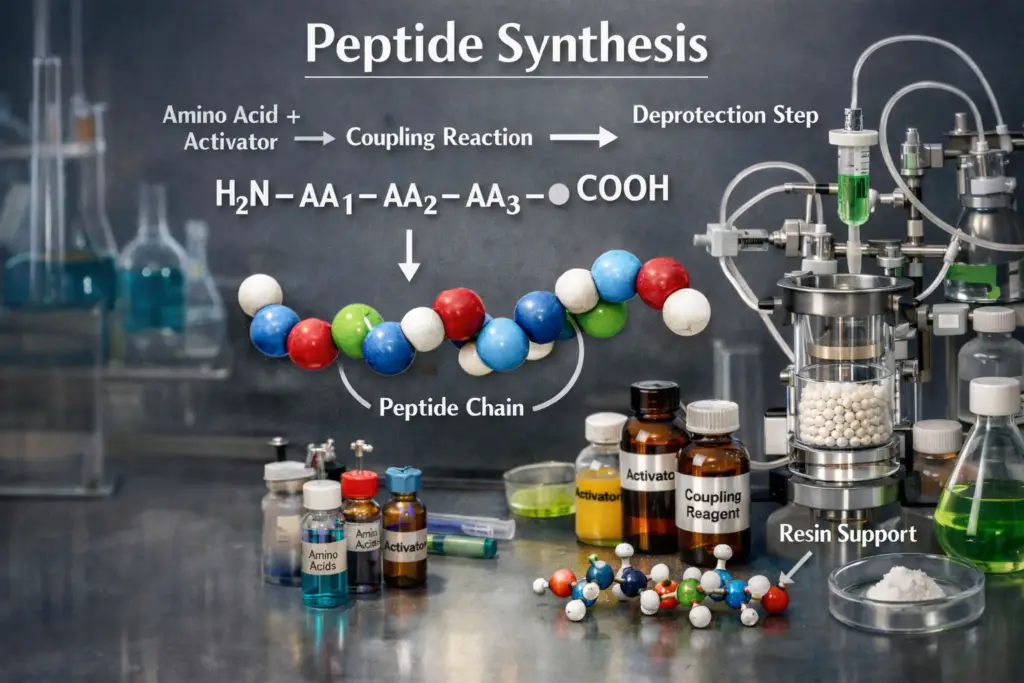
The synthesis of a peptide is a delicate, multi-step chemical process known as Solid Phase Peptide Synthesis (SPPS). Every amino acid added to the chain presents an opportunity for error. In a domestic facility, these errors are mitigated by high-end equipment and highly trained chemists who adhere to strict American laboratory standards.
The HPLC and Mass Spectrometry Factor
A “trusted” supplier must provide proof of what is inside the vial. High-quality peptides USA manufacturers offer are verified using High-Performance Liquid Chromatography (HPLC) and Mass Spectrometry (MS). HPLC measures the purity of the sample, while MS confirms the molecular weight to ensure the sequence is correct.
In many overseas facilities, “batch testing” is common, where one vial is tested out of thousands. In contrast, reputable domestic peptide suppliers for research USA often utilize more frequent testing cycles. As noted in the Journal of Peptide Science, “The presence of even minor impurities, such as truncated sequences or salts, can lead to off-target effects that compromise the integrity of biological assays” (Mandsberg et al., 2023).
Why Restore Peptides Prioritizes Domestic Quality
At Restore Peptides, we understand that your research is only as good as the materials you use. Our commitment to sourcing and distributing USA made peptides stems from a desire to eliminate the “black box” of international shipping and manufacturing.
When you visit Restore Peptides, you are accessing a catalog built on the principles of transparency. We ensure that our peptides are synthesized in environments that prioritize TFA (Trifluoroacetic acid) removal and proper lyophilization. These steps are often rushed in high-volume, low-cost international labs, leading to peptides that degrade quickly or cause localized reactions in research models.
The Logistics of Stability: Why Shipping Distance Matters
Peptides are inherently fragile. They are sequences of amino acids held together by peptide bonds that can be broken by heat, light, or physical agitation. This is one of the most compelling reasons to utilize domestic peptide manufacturers.
Cold Chain Integrity
A peptide shipped from a different continent may sit in a hot cargo hold or on a tarmac for days. By the time it reaches a US lab, the “puck” of lyophilized powder may have already begun to degrade. This degradation is not always visible to the naked eye.
By utilizing peptide suppliers USA based, the transit time is reduced from weeks to days. This shorter window ensures that the structural integrity of the peptide is preserved. “Thermal stability is a critical parameter for the efficacy of synthetic peptides, particularly those with complex secondary structures,” states a report by the National Center for Biotechnology Information (NCBI, 2024).
Regulatory Accountability and “Research Use Only” Compliance
The legal landscape for peptides in 2026 is complex. The FDA and other regulatory bodies maintain strict oversight on how these compounds are marketed and sold. Trusted peptide suppliers in USA operate under the “Research Use Only” (RUO) mandate with a high degree of transparency.
Domestic companies are subject to US laws regarding consumer protection and chemical safety. If a US-based company sells a product that is contaminated or mislabeled, there are clear legal avenues for recourse. With overseas vendors, there is often zero accountability. If a batch is bunk, the researcher is simply out of luck.
Avoiding Contaminants
A major concern with non-domestic peptides is the presence of heavy metals or residual solvents. US-based labs must adhere to EPA and OSHA standards for chemical handling and disposal. This means the end product is far less likely to contain toxic residues that could kill a cell culture or skew a metabolic study.
Economic and Scientific Infrastructure
Choosing USA made peptides also supports the domestic scientific infrastructure. When you purchase from peptide suppliers USA, you are funding the laboratories, the researchers, and the technological advancements that happen within our borders. This creates a feedback loop of quality. As more researchers demand domestic quality, American labs invest in better equipment, which in turn leads to even higher purity levels.
Identifying True USA Made Peptides: Red Flags to Watch For
Not every website that claims to be a “USA supplier” actually manufactures or even stocks their products in the States. Here is how to verify a trusted peptide supplier in USA:
Physical Address: Look for a verified business address in the United States.
COA Verification: Ensure the Certificate of Analysis (COA) comes from an independent, third-party US laboratory.
Customer Service: Call or email the company. Domestic suppliers like Restore Peptides provide responsive, technical support from individuals who understand the science.
Pricing Realism: If the price is 70 percent lower than the industry average, it is likely an international drop-shipment, regardless of what the “About Us” page says.
The Technical Advantage of Lyophilization in US Labs
Lyophilization, or freeze-drying, is the process of removing water from the peptide while it is frozen. This is the gold standard for preservation. American labs typically use high-vacuum, low-temperature systems that create a stable, porous “cake.”
Inferior synthesis often results in a “sticky” or collapsed powder. This indicates that residual moisture is present, which will lead to rapid hydrolysis (the breaking of peptide bonds). High-quality peptides USA are characterized by a clean, white, uniform puck that reconstitutes instantly into a clear solution.
Final Thoughts on Domestic Sourcing
As we move through 2026, the complexity of peptide research will only increase. Whether you are studying metabolic signaling, tissue repair, or neurological pathways, the tools you use define your results. Sourcing USA made peptides is a commitment to the scientific method.
Restore Peptides remains dedicated to being one of the premier peptide suppliers USA can rely on. By prioritizing domestic quality and rigorous verification, we provide researchers with the peace of mind needed to focus on their data, not the integrity of their chemicals. When the stakes are high, the origin of your peptide matters.
Frequently Asked Questions
1. Are USA made peptides more expensive?
Generally, yes. The cost reflects the higher wages of skilled American chemists, the price of advanced testing (HPLC/MS), and the adherence to environmental and safety regulations. However, the “cost” of a failed experiment due to impure peptides is far higher in the long run.
2. How do I know if a peptide is actually synthesized in the USA?
You should ask the supplier for their third-party testing results and the name of the lab that performed the test. Authentic domestic peptide manufacturers will be transparent about their supply chain and testing protocols.
3. Does “USA Made” affect the legality of the peptide?
Regardless of origin, peptides must be used for research purposes only. However, domestic suppliers are generally more diligent in ensuring their products meet the “Research Use Only” labeling requirements set by US authorities.
4. What is the shelf life of a domestically produced peptide?
If properly lyophilized and stored in a freezer at -20°C, most USA made peptides from Restore Peptides will remain stable for 2 to 5 years. Domestic shipping ensures the peptide doesn’t spend weeks in heat, which maximizes this shelf life.
5. Why is 98% purity the standard for research?
In scientific research, “research grade” typically refers to compounds with 98% or higher purity. Anything below that threshold begins to introduce unwanted variables—what you could call “known unknowns”—into a study.
Using peptides at ≥98% purity helps ensure that the biological response observed is driven by the peptide itself, rather than residual synthesis byproducts or impurities.
Most growth hormone–related peptides commonly fall within the 97–98% purity range after standard purification. Achieving 98% is generally considered sufficient for research purposes, as it provides a strong balance between data reliability and practical production efficiency.
Reference URLs
Journal of Peptide Science – Impurity Impacts: https://onlinelibrary.wiley.com/journal/10991387
NCBI – Thermal Stability of Synthetic Peptides: https://www.ncbi.nlm.nih.gov/pmc/articles/PMC7022513/
American Chemical Society – Peptide Synthesis Standards: https://pubs.acs.org/journal/acscii
EPA – Chemical Laboratory Safety Standards: https://www.epa.gov/laws-regulations/summary-toxic-substances-control-act